


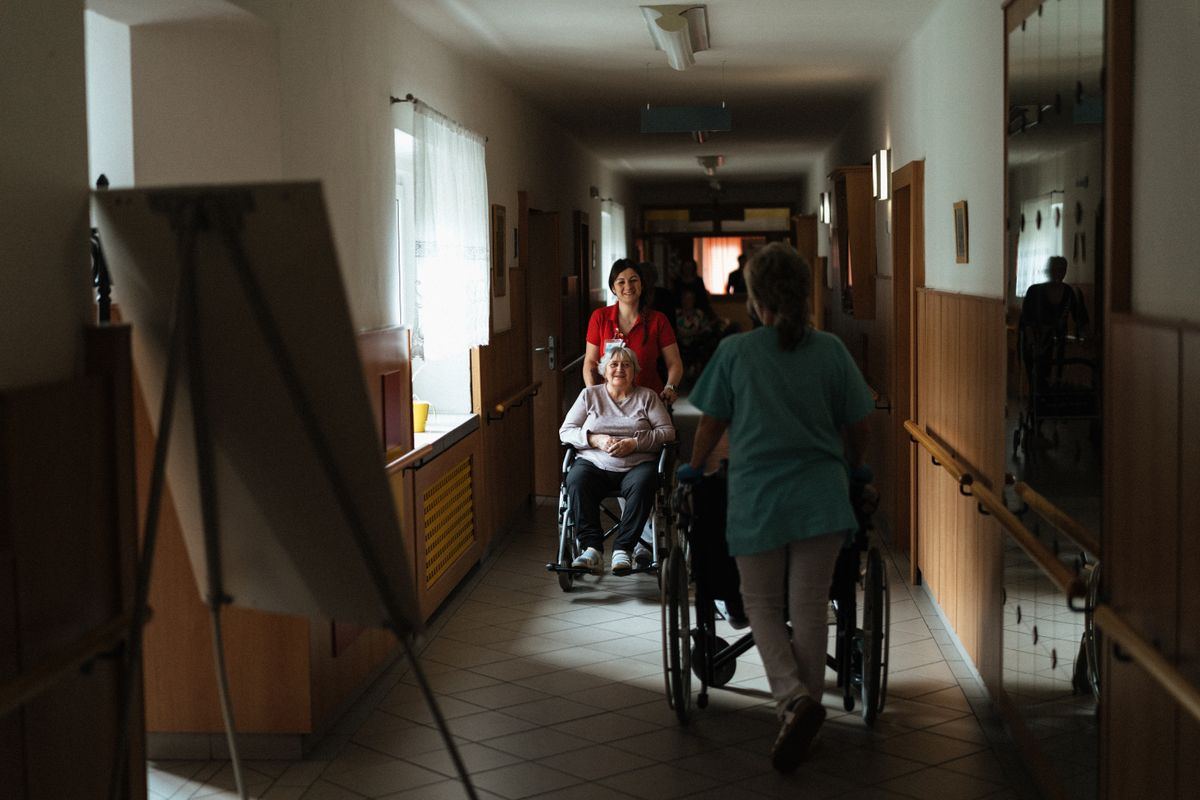
Non-emergency patient transport (NEPT) is the booked, non-urgent movement of patients who need clinical monitoring or a stretcher but don’t require an emergency ambulance — for example, hospital discharges and inter-facility transfers. It’s licensed and regulated at the state level, and providers carry the clinical and safety duties. A support desk can handle bookings and phones, but not those clinical responsibilities.
Not every patient who needs to be moved needs lights and sirens. A person being discharged home after a hip replacement, a resident heading from an aged-care facility to a specialist appointment, or a stable patient transferring between hospitals all need transport with proper care — but not an emergency ambulance. That’s the world of NEPT.
What exactly counts as NEPT?
NEPT covers pre-booked, non-urgent patient transport where the patient may need clinical monitoring, oxygen, or a stretcher during the journey. It sits between a standard passenger vehicle and an emergency ambulance. Typical work includes:
- Hospital discharges to home or residential aged care
- Inter-facility transfers between hospitals or clinics
- Transport to and from dialysis, oncology, and specialist appointments
- Stretcher and wheelchair-accessible non-emergency journeys
How is NEPT regulated in Australia?
NEPT is regulated state by state, and the rules differ. Victoria licenses NEPT providers through the Department of Health with defined clinical and vehicle standards; other states and territories have their own frameworks and accreditation requirements. Vehicles, equipment, and the clinical qualifications of crew are all specified. This is a licensed activity, not something anyone with a van can simply start doing.
If you’re running or setting up a NEPT service, your state health regulator is the authority on what you must hold and maintain. This article is a plain-English overview, not legal or compliance advice.
Where does a support desk fit in — and where doesn’t it?
A BPO desk supports a licensed NEPT provider with the non-clinical, administrative side of the operation: taking booking calls, coordinating schedules, confirming pickups with hospitals and families, and keeping records tidy. What a support desk does not and cannot do is carry your clinical governance, crew qualifications, vehicle accreditation, or patient-safety duties. Those stay with you, the licensed operator, at all times.
Every booking, reservation, and enquiry answered in your brand voice — your customers never know it is outsourced.
Why do NEPT providers look at outsourcing the phones?
Booking demand for patient transport is lumpy and time-sensitive. Hospital discharge coordinators ring when a bed is needed, families ring anxious about an elderly parent, and appointments cluster around clinic hours. Missing those calls means the job goes to another provider — and it means a patient waiting. A dedicated desk that answers promptly, in your service’s name, keeps that pipeline moving without your own coordinators drowning in the phones.
The honest positioning
We won’t claim to be a clinical service or that every call is handled onshore. We provide trained, brand-specific agents with clear English, transparent pricing, and no lock-in — handling bookings and admin so your qualified crews and coordinators can focus on patients. The licensing, clinical safety, and regulatory compliance are, and remain, yours.
Common questions
Where this guide fits: it is part of the NEPT & patient transport desk we run 24/7. Next step: start a free week of 24/7 coverage.

Priya manages the 24/7 answering desk at SS Support Network, where her team handles first-ring pickup for transportation and roadside operators. She writes about call handling, booking accuracy, and turning missed calls into booked jobs.
Connect on LinkedIn